Onboarding a New Dev onto an Existing Power BI Model
The default onboarding for a Power BI model is no onboarding: here’s the workspace, the report’s called Sales Master v3, ask Dan if something looks weird. The new developer then spends six weeks reverse-engineering by trial and error what a structured two weeks could have taught. They inevitably make risky edits before they know which measures are load-bearing.
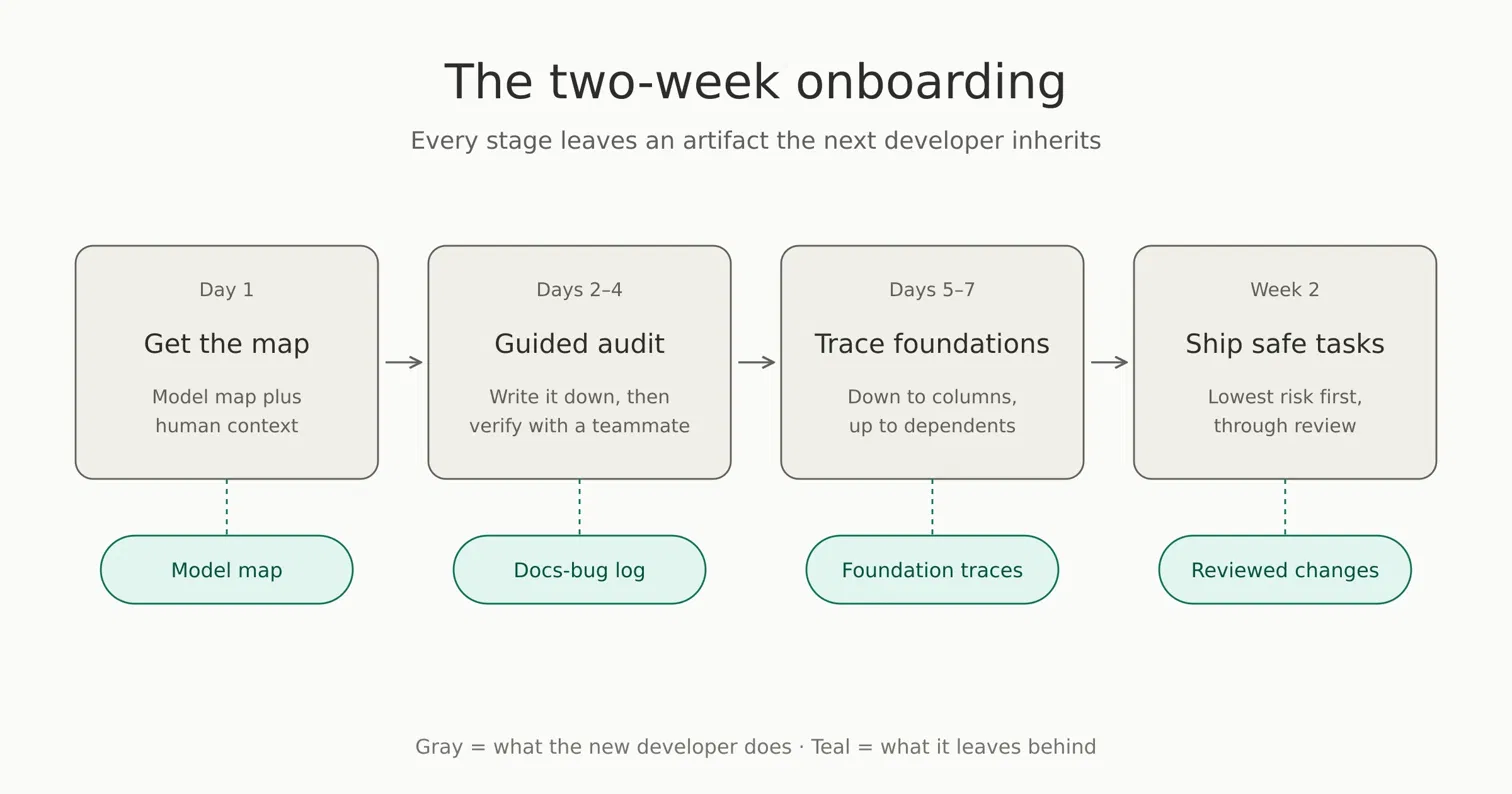
The fix isn’t a longer document. It’s a training and familiarization sequence the right things in the right order, most of which you already have if the model is documented, and all of which double as documentation if it isn’t. Here’s the two-week shape.
Day one: hand over a map, not a login
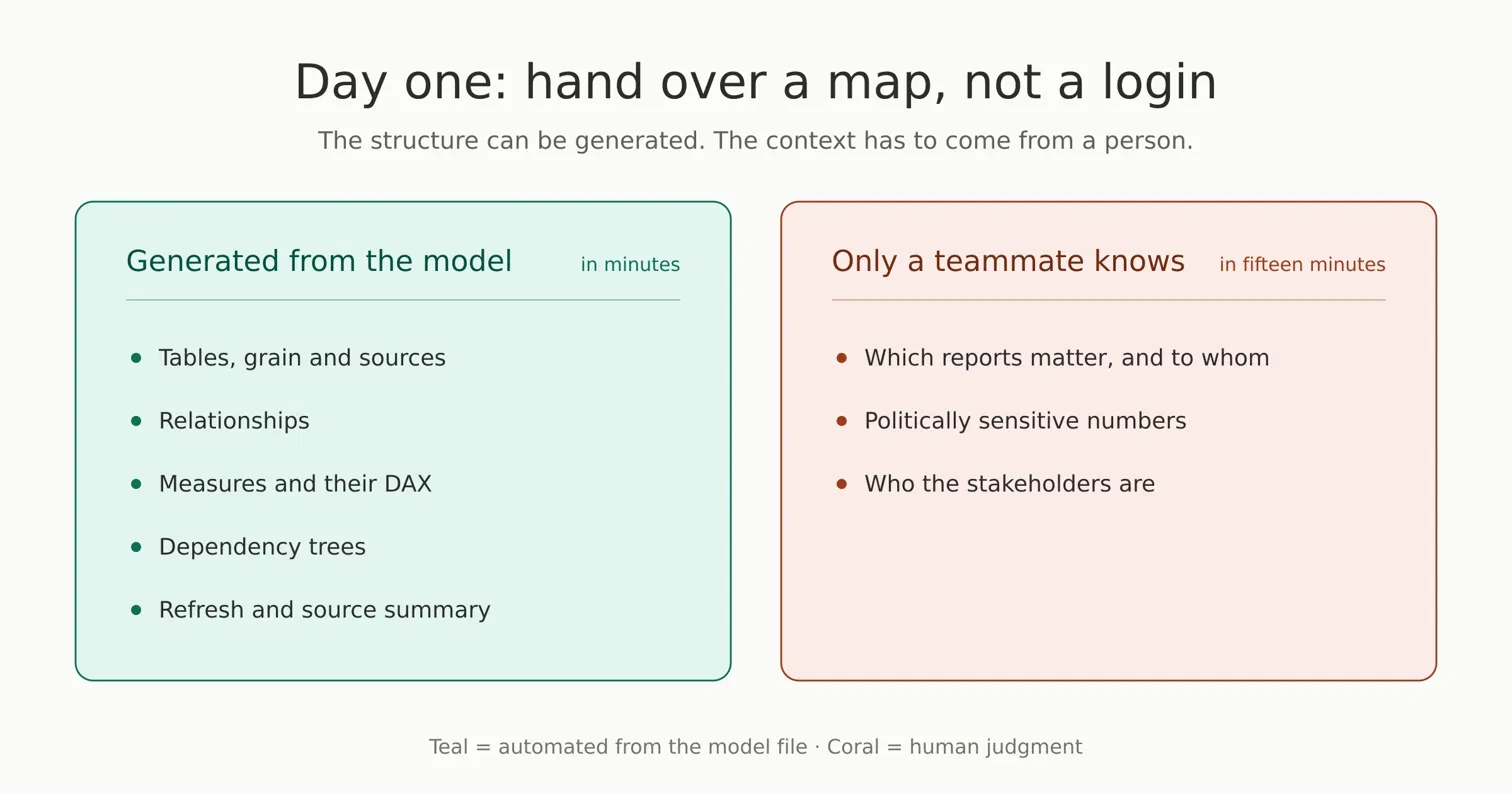
The single highest-impact onboarding artifact is the model map: the documented inventory of tables, relationships, and measures, with the dependency picture attached. If the documentation exists, day one is reading it. If it doesn’t, generate the structural version. You need inventory, dependency trees, and a source summary to hand over. DAX Prism produces exactly this artifact, and “here’s the map” beats “here’s the login” by weeks of ramp time.
With the map, add the three things no tool can generate: which reports matter most and to whom, which numbers are politically sensitive, and who the stakeholders are. Fifteen minutes of context that saves fifteen increasingly angry emails or slack messages later.
Days two to four: the guided audit
Here’s a reframe that makes onboarding concrete: onboarding onto an unfamiliar model is auditing an inherited report with a safety net. The new developer needs to understand the same things: sources and refresh, model structure, measures and dependencies and dead weight but with the advantage of the base knowledge still in the building.
Have them do the audit actively: write down what each table’s grain appears to be, what each core measure seems to do, then verify with a teammate. The gaps between their reading and reality are the exact places the model is unintuitive, which makes the new developer’s confusion a free documentation review. Every question they ask that the docs couldn’t answer is a docs bug; log it.
Days five to seven: learn the foundations by tracing them
Not all measures deserve equal attention. Give the developer the short list of foundational measures. The Sales, the Net Sales, the time-intelligence tier, etc, and and have them trace each one’s dependency tree down to the columns, then upstream to see what’s built on top.
This is the highest-value exercise of the two weeks, because it teaches the two things that prevent accidents: which measures have blast radius (the accidental-edit insurance) and how the model’s logic actually composes (the mental architecture that field lists never convey). A developer who has walked the chains of five foundational measures understands the model better than one who has read all two hundred definitions once.
Week two: safe first tasks, in order
Confidence comes from shipping, so ship — but sequence the risk:
- A formatting or layout change. Zero model impact; teaches the publish workflow and the review process end to end.
- A new leaf measure. Something built on the foundations with nothing built on it. Changing real DAX, real business logic, but with a blast radius of one.
- A cleanup task from the debt register. Removing a verified-unused measure or renaming a
v2fossil: genuinely useful, teaches the verification discipline, touches nothing live. - Only then, an edit to something shared — with the upstream walk done in review, and a teammate on the other end of it.
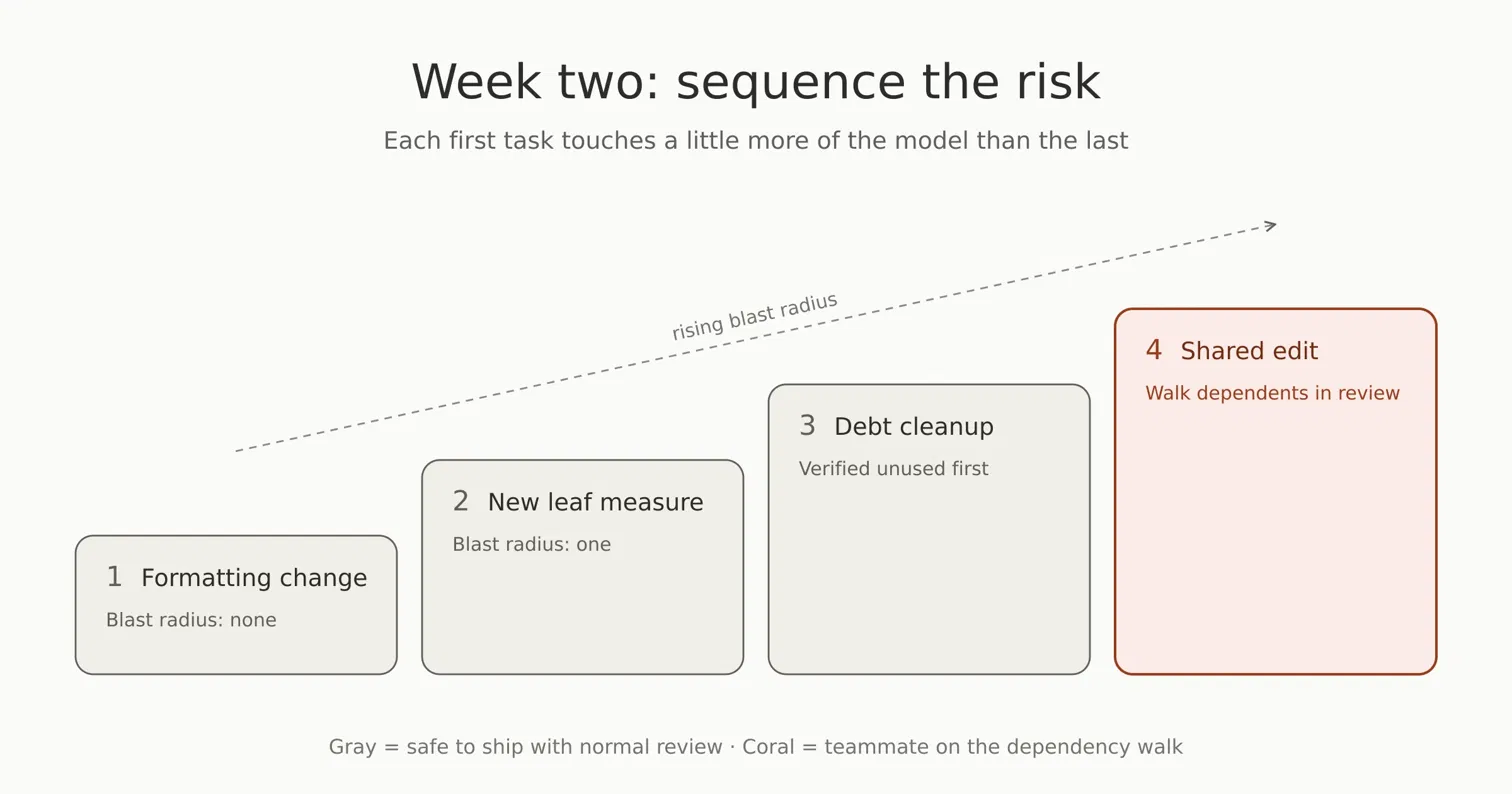
Each task runs through the team’s normal review, which is where conventions transfer faster than any style guide: two rounds of review feedback teach the house style better than a document read once.
What the two weeks should leave behind
By the end, the developer should be able to answer, unaided: where does each core table come from, which measures are foundational and what depends on them, what’s the publish-and-review workflow, and where does documentation live and when does it get updated. If they can’t, the gap is the onboarding’s fault, not theirs, and it’s usually a missing artifact rather than a missing effort.
And notice the recurring trick: nearly every onboarding step produces or improves an artifact. The generated map, the docs bugs from the guided audit, the traced foundations, the cleanup task. Onboarding done this way isn’t a cost the team pays; it’s the periodic audit and the documentation refresh, executed by the person with the freshest eyes. The second developer you onboard inherits a better model than the first one did, which is an onboarding metric that compounds.